
Agricultural Biosecurity Equipment and Wash Systems
Three minute automated wash systems that reduce pathogen spread between sites.
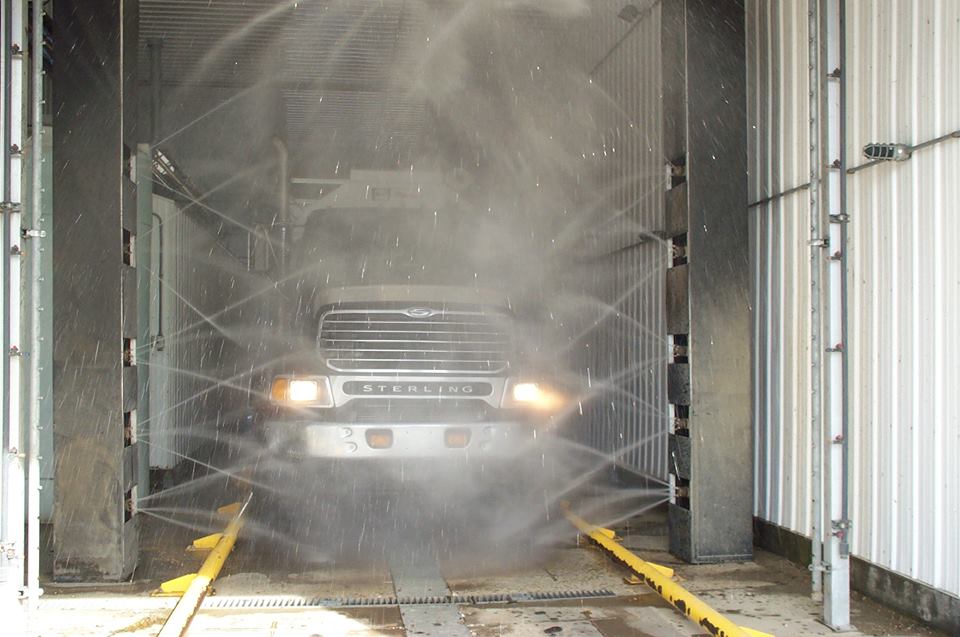


An Outbreak Shouldn’t Threaten Your Operation
You can’t see bird flu on a truck tire, or PRRS on an undercarriage. Broomrape and fusarium hitch rides on equipment. When an audit flags your vehicle traffic or disease moves through your region, the right biosecurity equipment reduces the risk before it reaches your barns.
What Needs Sanitizing at Your Gate
Every vehicle that enters your property can carry pathogens:
- Feed trucks
- Egg trucks
- Live haul
- Pullet movers
- Manure and litter trailers
- Dead-bird pickup
- Personal vehicles
When Your Auditor or Vet Flags Traffic
An audit finding on vehicle traffic needs a fix you can show. Buyers and processors expect proof that every truck gets sanitized, every time. An automated system gives you one repeatable process you can document.
The Cost of Getting This Wrong Is Real
One HPAI-affected dairy herd lost over $79,000 in four months. One Illinois poultry farm lost its entire 3,000-hen flock, receiving just $2,500 against $100,000 in expected revenue. Losses like these can start with a single vehicle.
A Vehicle Sanitizing System, Right at Your Farm
On-site systems install right where dirty traffic meets your clean side. Vehicles wash before or after routes, with no separate trip. The only way into the green zone is through the wash.

Red Zone: Assume Contaminated
Gray Zone: Wash and Sanitize

Green Zone: Clean
How We Help Stop Disease Before It Reaches Your Livestock
Specialized biosecurity chemistry and equipment, working together, not only standard truck washing.
Option One

Sanitizer Only
Drivers pull through a sanitizer-only arch at low speed. The arch applies Fleet Quat or Pure Guard, an EPA-registered sanitizer, to the full vehicle, including the undercarriage.
Option Two
Break It Down
For a complete biosecure wash, the process runs in three steps. Sanitizer works best on a clean surface, so the first two steps clear the way.
Step 1, Presoak: A low pH presoak loosens road film and mineral buildup so the wash can reach bare surface.
Step 2, Wash & Rinse: Detergents remove grease, diesel, and organic residue like manure and litter. Organic matter weakens sanitizer, so this step matters. A rinse clears the detergent before sanitizing.
Step 3, Sanitize: Fleet Quat or Pure Guard covers the clean surface, including the undercarriage. It’s authorized by the USDA for use in federally inspected meat and poultry plants and is registered in eight states.
Real Fleets, Real Results
Poultry facilities, livestock farms, feed mills, and food haulers trust Hydro-Chem Systems to reduce risk and keep operations moving.
Why Biosecurity Operations Choose
Hydro-Chem Systems
flare
Solving biosecurity challenges since 2014
flare
Specialized chemistry that cleans and reduces pathogens
flare
Trusted by some of the biggest names in the industry
Common Questions
A biosecurity vehicle wash system is designed to support consistent vehicle cleaning and sanitizing processes to help reduce the risk of contamination transfer between sites.
Biosecurity washing focuses on process control, consistency, and separation of cleaning and sanitizing steps rather than appearance alone.
A biosecurity system can be designed to include both cleaning and sanitizing stages, depending on the level of risk control required.
Consistency is important because it ensures the same process is followed every time, helping reduce variability that can increase risk.
A biosecurity wash typically takes about 1 to 5 minutes depending on system design and the number of wash and sanitizing steps used.
A full Bio-Security wash can handle approximately 1 wash every 3 minutes. This equates to approximately 20 washes per hour and 480 per day. This is its capacity; we typically see around 50 per day.
Biosecurity systems are commonly designed to be touchless and brushless to reduce cross-contact and simplify cleaning.
The system can be customized based on traffic flow, facility layout, vehicle types, and biosecurity protocols. Some use only a sanitizer arch, others are full touchless wash systems.
A properly designed biosecurity system supports consistent processes that can help facilities meet internal and external biosecurity requirements.
Undercarriage cleaning is commonly included because the underside of vehicles is a high-risk area for contamination transfer.
A biosecurity vehicle wash is part of a broader risk-reduction strategy and supports consistent application of cleaning and sanitizing processes, but it does not replace overall facility biosecurity protocols.
A wash system can support the vehicle and traffic parts of your biosecurity plan. It gives you one consistent process to show. Your auditor or veterinarian decides what your plan requires.
Yes, a Bio-Security wash is just as effective in the winter as it is in the summer. Statistically, the chance of virus spread through migratory birds is lower because most birds leave northern areas, however, virus transmission is still possible year-round. It is vital to adopt a year round strategy in an attempt to prevent the spread of viruses.
Fleet Quat and Pure Guard are currently registered in Delaware, Florida, Illinois, Indiana, Iowa, Michigan, Ohio, and South Carolina. They can be registered in additional states. Ask us about yours.
Get Automated Wash Information
Protect Your Operation From the Next Outbreak
Whether you’re closing out an audit finding or getting ahead of disease season, let’s build a wash protocol that fits your risk level and your routes.
Or call 616-531-6420