
Waste & Municipal
Stop Your Fleet Retiring Early
Extend vehicle life by years and avoid tens of thousands in replacement part costs
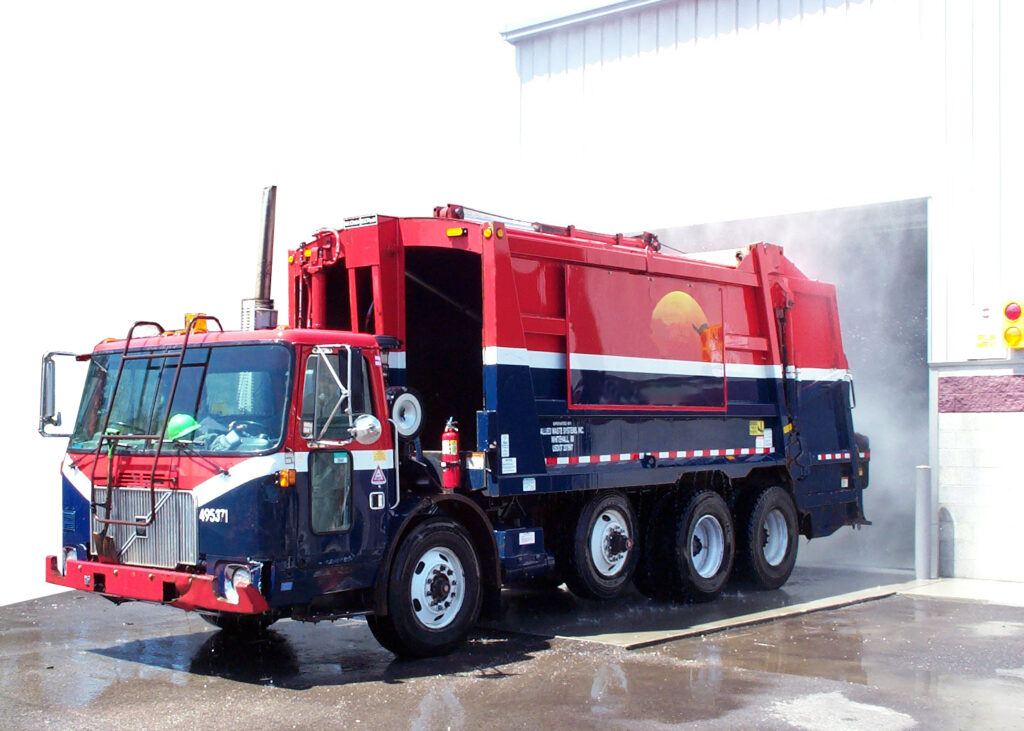


Salt and Chemicals Are Destroying Your Fleet Faster Than You Think
Salt spreaders and other heavy duty trucks like refuse trucks or gravel haulers can face more corrosive exposure than many commercial fleets. Without proper attention to reducing corrosion, you’re budgeting for failure.
Brake Valves Fail Often
Undercarriage cleaning is crucial for safety and longevity.
“Normal” Maintenance Costs Surge
Corrosion damage becomes routine maintenance issues.
Capital Budgets Can’t Keep Up
Short replacement cycles decrease operational efficiency.
Resale Value Takes a Hit
Vehicles in poor shape don’t fetch high resale prices.
Find Out What Corrosion is Really Costing You
Why Municipalities Install
In-Facility Automated Systems
Stop sending trucks off-site. Stop assigning crews to climb icy vehicles. Install a system at your facility and wash daily without operational disruption.

Significantly Extended
Fleet Life

No Crews Climbing
Icy Trucks

50+ Vehicles Per Day
Target Corrosion Where It Actually Happens
Manual washing hits what people see. Our automated systems don’t stop there, they target where rust often begins — on the undercarriage, brake lines, air valves, hydraulic fittings.
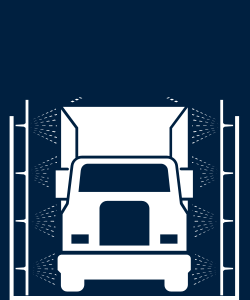
Break it Down
A low pH presoak attacks salt, minerals, and road chemicals. Enhanced undercarriage washing targets frame-mounted brake lines, air valves, and hydraulic fittings where rust begins.
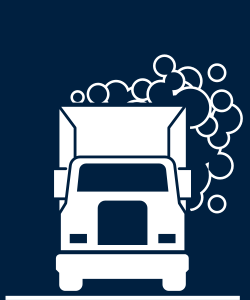
Blast it Away
Detergents break down grease, diesel film, and refuse residue. Our chemistry handles different kinds of dirts and soils municipal contamination without requiring brushes —so you can wash daily without equipment damage.

Get Back on the Road
In a few minutes, vehicles pull through and come out clean. Brake valves easily last twice as long. Frames stay clean instead of rotting out.
Real Fleets & Real Results
Michigan Department of Public Works
Before Hydro-Chem Systems, a Michigan Road Commission replaced brake valves almost annually. Corrosion repairs happened often. Mechanics blamed it on “normal Michigan winters.” Fleet vehicles retired early. Capital budgets couldn’t keep up.
After installing an HCS automated system:

90% reduction in wash time to ~2.5 minutes

Saved $9K-$15K annually on just brake valve replacements

Increased truck resale value by ~15%
With such a successful experience with Hydro-Chem Systems and because of the incredible improvements to their fleet maintenance problems, the Road Commission has already installed an additional automated wash system at another location.
Learn How Waste & Municipal Fleets Benefit From Using Hydro-Chem Systems
Why Municipalities Choose Hydro-Chem Systems
flare
We design both the equipment and the chemistry
flare
50+ years of fleet washing expertise
flare
Touchless systems fit any size / shaped fleet
flare
100% employee owned business
Common Questions
An automated wash system can be designed to handle heavy soil loads, grease, road film, and organic material common in waste and municipal fleets.
Undercarriage washing is especially important for municipal fleets because salt, debris, and moisture collect underneath and contribute to corrosion. Oftentimes, the vehicles themselves are the ones salting the roads and it becomes crucial to do undercarriage washing to reduce rust.
A typical wash takes about 2 to 3 minutes depending on vehicle size and system configuration.
Automated systems are built with industrial-grade components designed for demanding environments and frequent use, including heavy duty grime and buildup.
The system can wash a wide range of municipal vehicles including plow trucks, salt trucks, dump trucks, refuse trucks, and even pickup trucks, service vans, and cruisers.
Regular washing, especially undercarriage cleaning, helps to greatly reduce the buildup of corrosive materials that contribute to long-term damage. Read our case study from the Michigan Department of Public Works.
The system can operate in winter when properly designed with freeze protection, though extreme temperatures may require temporary shutdowns.
The system can be customized to adjust cleaning strength, chemicals, and wash steps based on seasonal conditions.
Get Automated Wash Information
See What Corrosion Prevention Will Save Your Heavy Duty Fleet
Let’s take a look at your fleet and show you how much you can save.